This article explores how luxury and ultra-luxury cruise lines can move beyond fragmented service delivery toward a more intelligent operating model, one that makes each stage of the voyage feel seamless, personalised, and commercially stronger.
- Elevating the cruise experience from terminal to top deck
- How cruise experiences have evolved
- Where the luxury cruise journey still breaks
- A more intelligent operating model at sea
- Designing a seamless luxury journey
- Turning operations data into relationship intelligence
- Empowering crew in a luxury context
- The commercial value of seamless journeys
- Practical steps for luxury cruise lines
- The next differentiator at sea
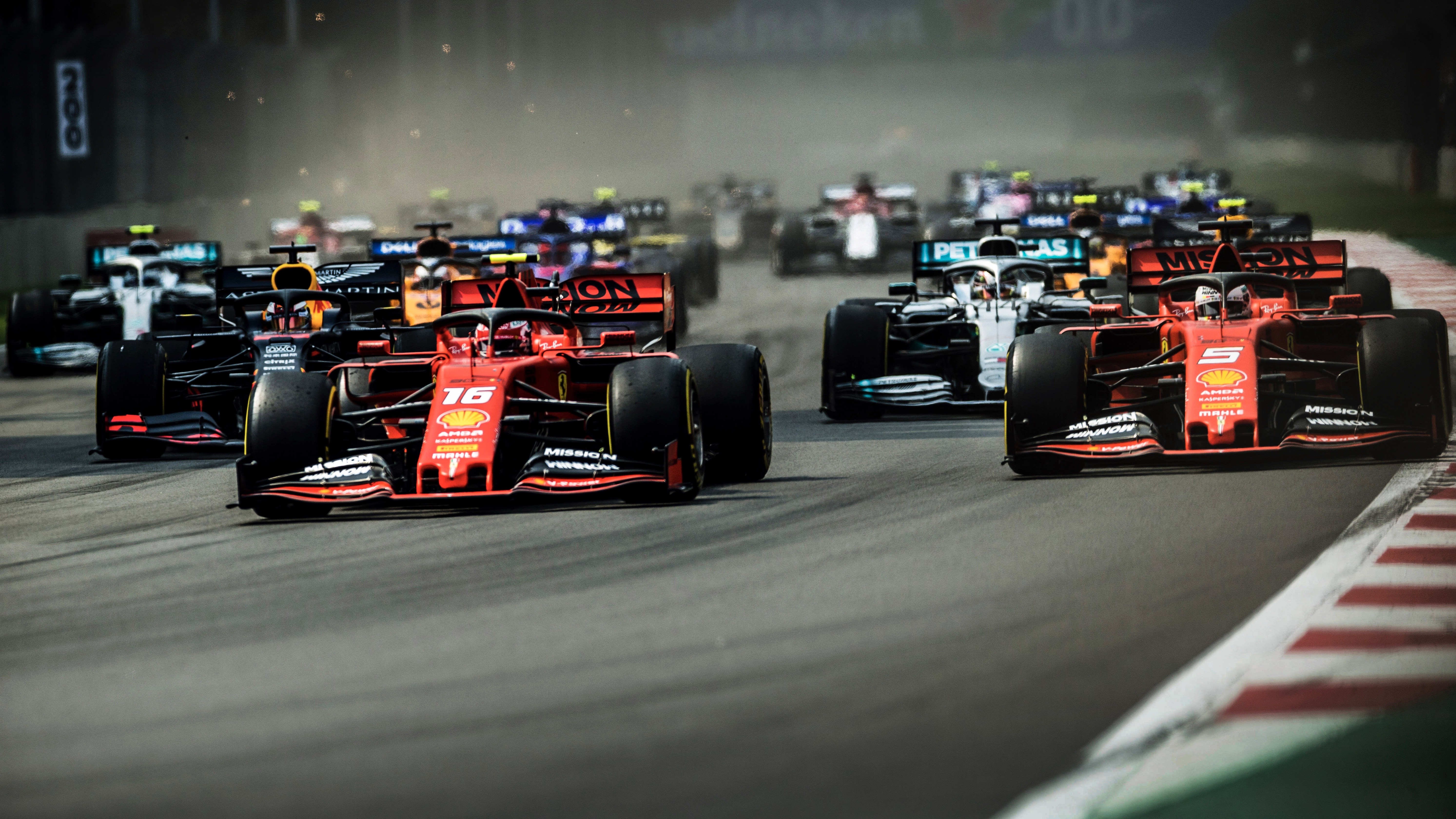
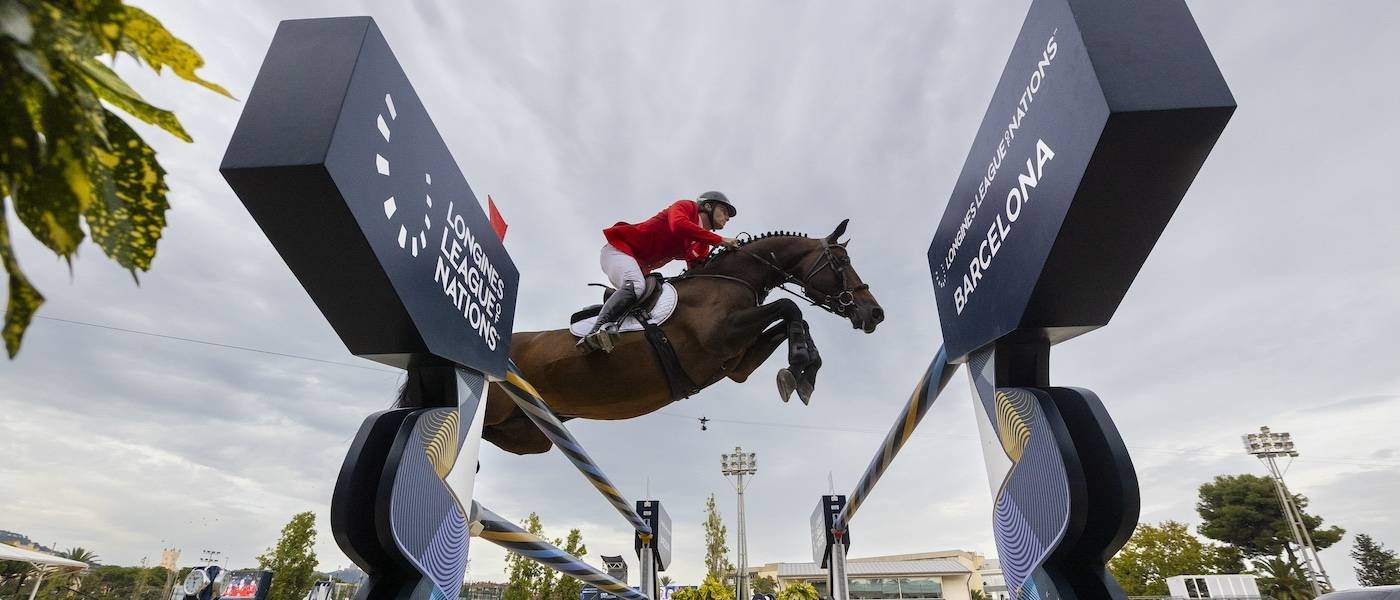
From the first transporter rolling into the paddock to the final sponsor photo after the podium ceremony, every moment of a motorsport event shapes how guests remember the experience. That includes fans in grandstands, team principals, sponsors, corporate guests, media, partners, V/VIPs, and companions moving across hotels, airports, circuits, lounges, garages, and hospitality suites.
Elevating the cruise experience from terminal to top deck
From the first step into a private terminal lounge to the last farewell at the gangway, every moment shapes how guests remember a cruise. For luxury and ultra-luxury brands, that memory needs to feel closer to a private resort or five-star hotel than to passenger transport. Guests expect not just refined interiors and spacious suites, but a journey in which timing, service, and recognition feel coordinated from beginning to end.
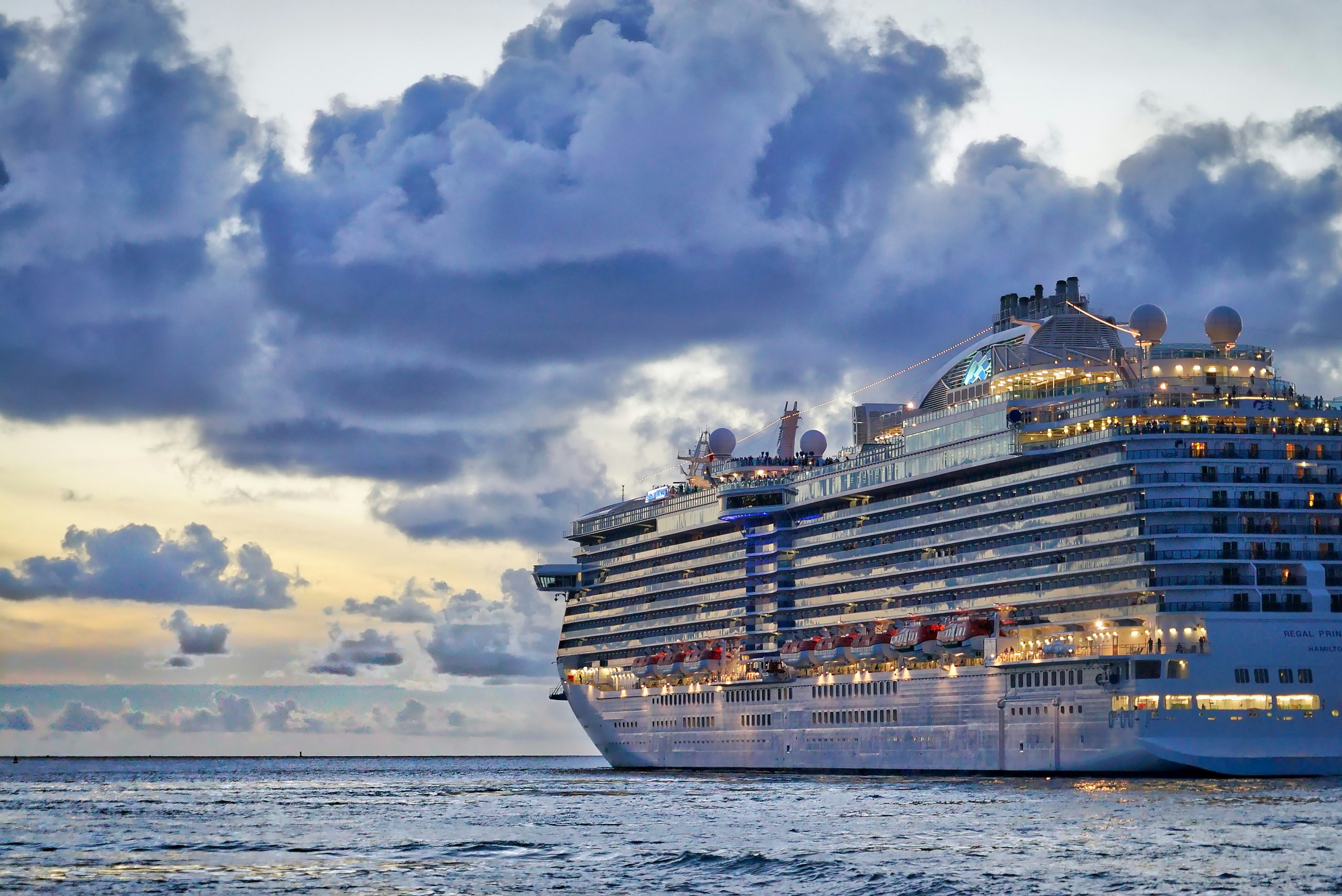
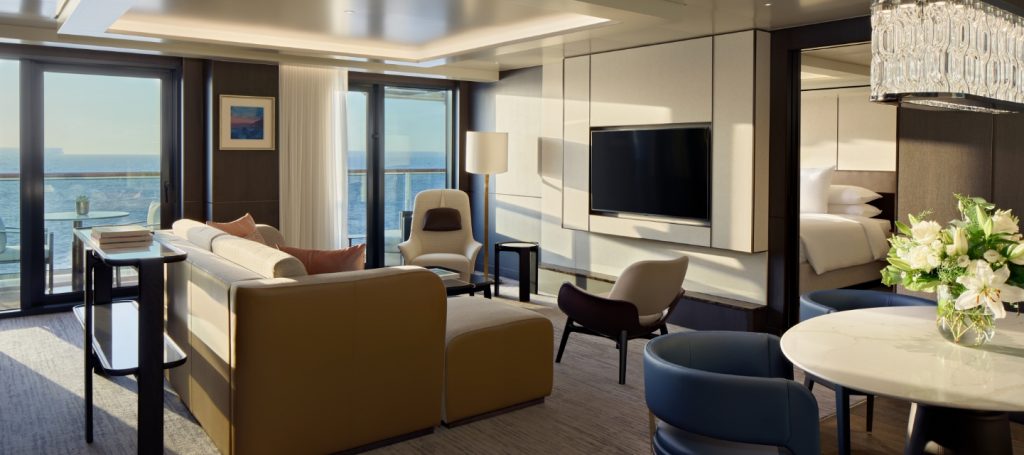
Luxury cruising has moved well beyond the traditional premium-ship formula. The newest entrants and most ambitious established brands now compete through smaller-scale, higher-touch experiences: yacht-style ships, all-suite accommodation, destination-rich itineraries, immersive shore programs, and a service model designed to feel residential rather than transactional. This is especially visible in the positioning of brands such as The Ritz-Carlton Yacht Collection, which combines hotel-style luxury with small-yacht cruising, Explora Journeys, which presents its ships as a new form of luxury ocean travel, and Seabourn, which emphasises private, yacht-like ships and all ocean-front suites.
That shift has raised the operational bar. When the promise is this elevated, manual handovers, delayed issue resolution, and fragmented guest information become far more visible. The challenge is no longer simply to run the ship efficiently. It is to ensure that the entire guest journey, from booking to post-voyage follow-up, feels as coherent and intentional as the brand itself.
How cruise experiences have evolved
For years, cruise lines could differentiate through hardware: larger vessels, new dining concepts, grander spas, or more entertainment venues. In the luxury segment, however, the competitive frontier has shifted. The most sophisticated operators now sell intimacy, calm, flexibility, and personalisation rather than scale. Guests are buying access to a highly choreographed lifestyle at sea, not simply transportation between ports.
That evolution has changed the profile of what guests value. Today’s luxury cruise traveller is often comparing the voyage not only with other ships, but with premium resorts, luxury trains, private villa stays, and top hotel brands. They expect smooth digital pre‑arrival, a low‑friction terminal experience, personalised dining, curated excursions, and service teams who appear to remember them from one moment to the next.
This matters because operational excellence is becoming part of the luxury product itself. A late luggage delivery, repeated explanation of an allergy, or disjointed handling of a private excursion does more than create inconvenience; it breaks the illusion of effortless travel that premium cruise brands work so hard to create.
Luxury cruising is increasingly shaped by smaller‑scale, yacht‑style products, hospitality brands entering the category, and guest expectations that feel closer to a private resort than to traditional passenger transport. As voyages become more immersive, more wellness‑led, and more personalised, the guest journey is no longer judged only by suites, dining, or destination access, but by how seamlessly the line coordinates the moments in between: arrival, recognition, transfers, issue handling, and continuity from terminal to ship to shore.
Where the luxury cruise journey still breaks
The weakest moments are often the least glamorous ones. Embarkation can still feel overly procedural, even at premium terminals. Document checks, security screening, baggage coordination, boarding windows, and suite‑priority handling may all sit in separate workflows, creating friction at exactly the moment the brand is meant to make its first impression.
Once on board, the fragmentation becomes subtler but no less important. A guest may share a dining preference with one venue but be asked again elsewhere. A concierge may know that a family has booked a private shore experience while the dining team remains unaware that the return time has shifted. A butler may resolve one issue well, only for the next interaction with guest services to start without any context. In a luxury setting, these small breaks in continuity matter disproportionately because they interrupt the feeling that the ship already “knows” the guest.
This is also where the pressure on crew becomes most visible. Front office, terminal teams, concierge, butlers, housekeeping, food and beverage, spa, and shore‑excursion staff may all contribute to the experience of the same high‑value guest, yet often without a shared operational picture. The guest experience rarely breaks because one team performs badly; it breaks because information, timing, and responsibility are lost in the spaces between teams. On smaller, high‑touch vessels and yacht‑style operations, where every interaction carries more weight, those gaps quickly erode the sense of calm, curated travel that luxury brands promise
A more intelligent operating model at sea
The alternative is to run the cruise as one connected operating model rather than a set of parallel departments. In this model, guest profiles, itineraries, preferences, access rights, and issues sit in a unified layer that quietly feeds the tools crew already use.
This is the role of Gaia, Neoma’s real‑time guest‑operations platform for hospitality and cruise. Gaia combines digital profiles with live signals from the physical world – from luggage trackers and escort badges to guest key cards – so that the operation sees not just who a guest is, but where they are in the journey and what should happen next.
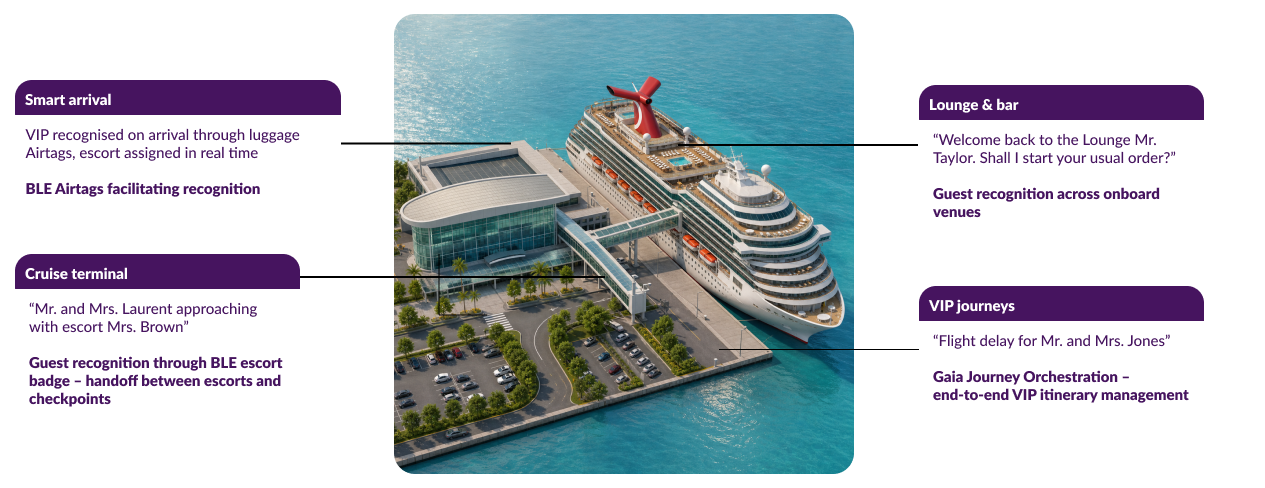
Instead of relying on a single touchpoint such as check‑in, Gaia uses multi‑signal recognition to follow the guest journey in motion. Luggage fitted with compatible tracking tags can be detected as it clears the terminal, signaling that a suite guest has effectively “arrived” before they reach the counter. Escort BLE badges turn staff into moving anchors in the system, so when one escort hands a party to another at the gangway, the receiving team already sees who is approaching. On board, guest BLE key cards allow lounges, restaurants, and spas to recognise who is coming within a few meters and surface the right name, suite, preferences, and any open issues without extra questioning.
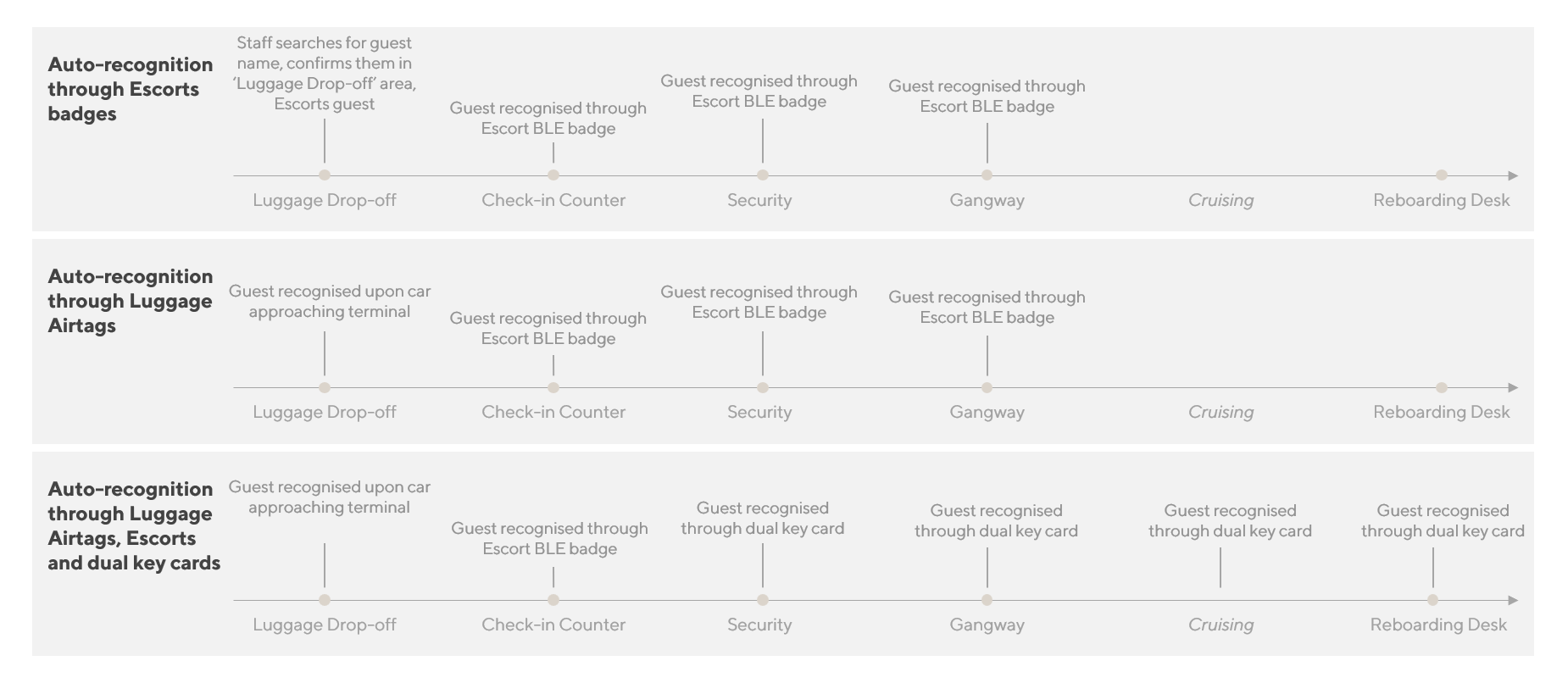
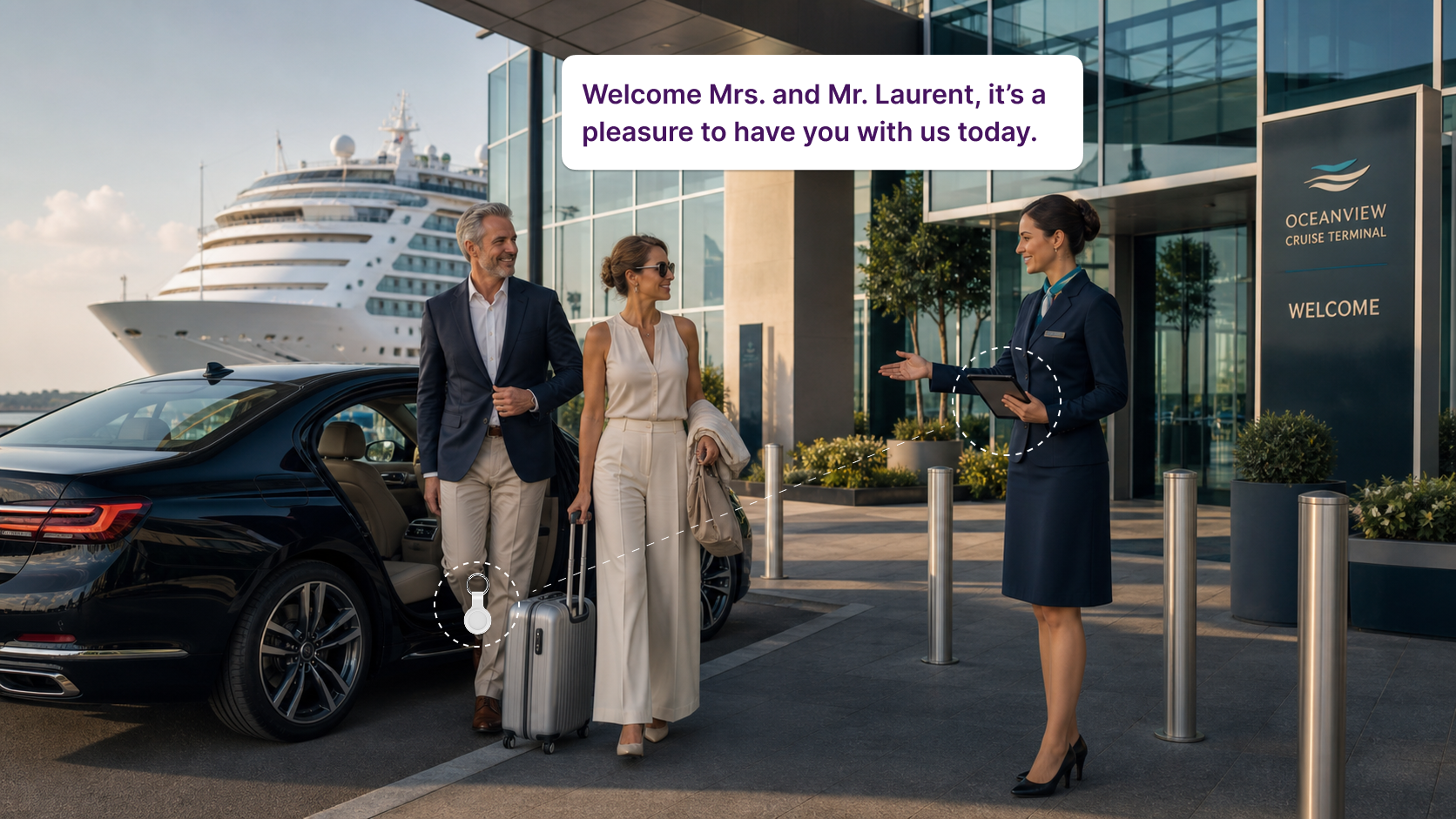
At the terminal, Gaia starts recognising the guest before they reach the counter: tagged luggage is detected as it approaches the terminal entrance, signaling that specific guests have arrived. As an escort picks them up, their BLE badge links that same guests to the staff member walking them through security and into the private lounge. At the check‑in desk, secure document verification is completed and, where regulations and consent allow, facial confirmation can be added as a layer of express check-in for returning guests. The terminal feels less like a bottleneck and more like the lobby of a luxury property.
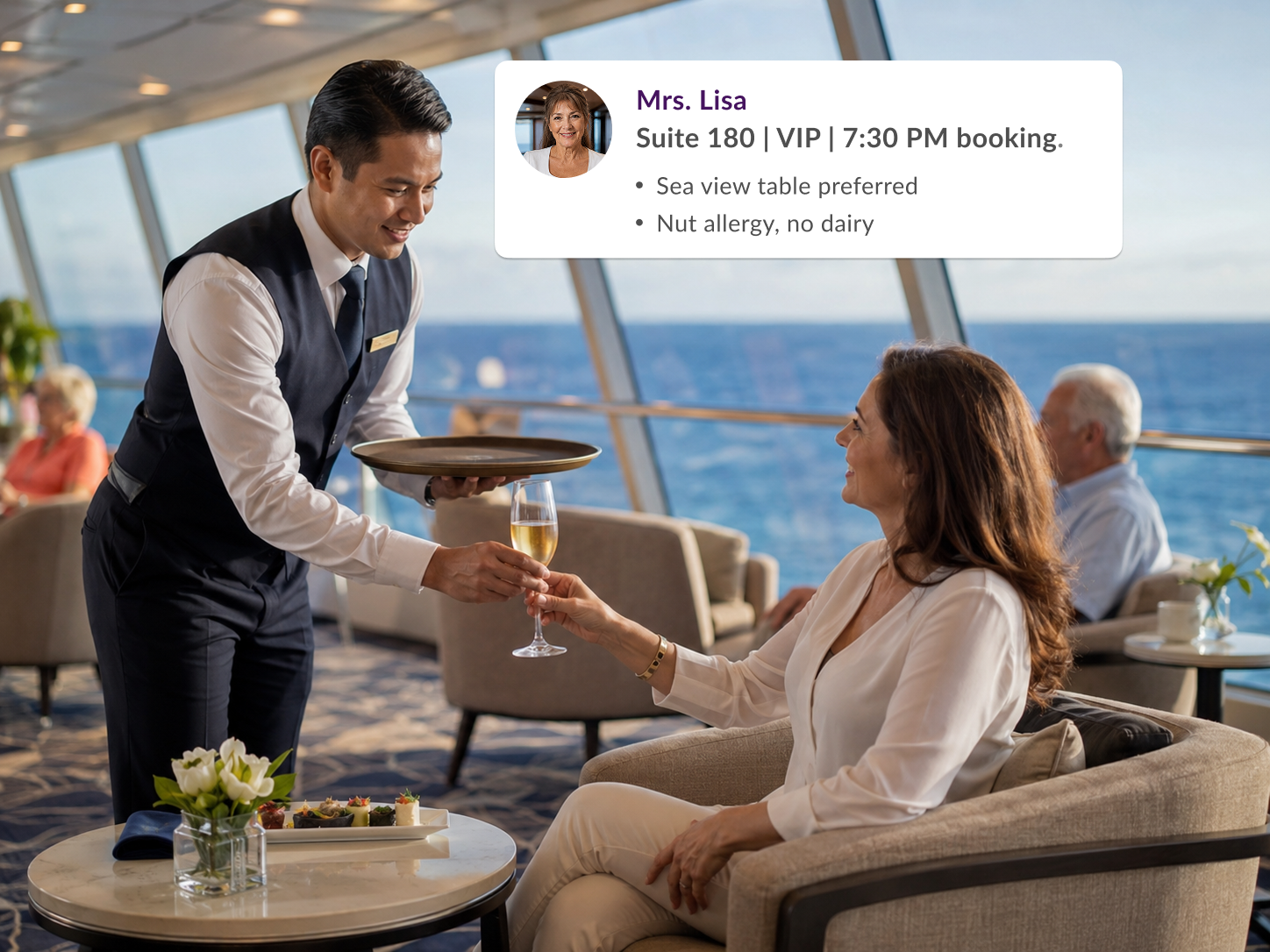
Once on board, guest BLE key cards quietly take over, allowing venues across the ship to recognise who is approaching, understand what level of service they expect. For crew, the difference is that Gaia turns a complex flow of guests, luggage, escorts, and venues into a live task list rather than radio chatter. Instead of asking “Who is this arriving at the lounge?” or “Has that delayed bag been found yet?”, staff see actionable prompts tied to real guests: welcome this party at the observation bar, check on that missing suitcase before dinner, prepare a quiet table for a returning suite guest who prefers to avoid the main show.
The effect is that the ship starts to behave less like a collection of departments and more like a single host with a good memory.
Designing a seamless luxury journey
Seen through the lens of a luxury cruise line, intelligent operations change the feel of each stage of the voyage.
Embarkation stops being an exercise in damage control and becomes a managed flow. Instead of reacting to queues as they appear, the line can predict when peaks will hit, open the right mix of security and check‑in lanes, and reassign staff in minutes rather than half an hour. Priority guests, families and travellers needing assistance are not just “fast‑tracked” in theory; their arrival is flagged in advance, tasks are assigned to named staff, and the terminal sees in real time when each handoff is completed. The result is a calmer, shorter embarkation window and a more consistent first impression across the entire season.
Port days become especially important in this model because they concentrate operational risk and service opportunity at the same time. Excursions, transport timing, gangway flow, guest returns, and onboard reservations all need to remain coordinated in real time. This is particularly relevant for lines selling destination-rich, immersive itineraries – whether Mediterranean yachting, Caribbean island-hopping, or expedition-style luxury – where the value of the voyage depends as much on how smoothly shore experiences are delivered as on the ship itself.
The most important outcome is not just speed or convenience. It is continuity. Guests feel that each part of the journey builds naturally on the last, rather than resetting every time they meet a new crew member or move to a different venue.
Turning operations data into relationship intelligence
The real change comes when the data generated by day‑to‑day operations becomes the backbone of how a cruise line understands and serves its guests. Traditionally, relationship management has been driven by booking information and basic loyalty metrics: how often someone sails, which cabin category they choose, how much they spend. Useful, but limited. It says very little about how the voyage actually felt, what created loyalty, or what quietly pushed a guest toward trying a different brand next time.
An intelligent operations layer goes further by capturing what really happens on board and in port: which venues guests actually use, how long they dwell there, which experiences they repeat, which issues are logged, how quickly those issues are resolved, and whether follow-up felt adequate. Over multiple voyages, this builds a far richer memory than any survey. On resort-style yacht products and all-suite luxury ships, for example, this kind of intelligence can reveal whether guests consistently favour quieter lounges over busier decks, private shore arrangements over larger excursions, or certain dining formats over others – insight that can be used operationally as well as commercially.
The value appears when this intelligence flows back to the front line instead of staying locked in reports. Before a voyage, the system can brief butler, concierge, restaurant, and guest-services teams on what genuinely matters to high-value guests: which patterns to protect, which past issues to avoid repeating, and which experiences are most likely to resonate. During the trip, that context surfaces through the tools staff already use, so each interaction starts with more understanding and less guesswork.
Leadership gains a different kind of visibility as well. Patterns in the data show which experiences genuinely drive repeat loyalty, which operational failures recur across ships or itineraries, and where investment will have the greatest effect. For brands positioned at the very top end of the market, such as The Ritz-Carlton Yacht Collection or Four Seasons Yachts, or similar ultra-luxury lines, this kind of cross-voyage intelligence is especially valuable because repeat business depends on preserving a highly individual, high-touch relationship at scale.
Empowering crew in a luxury context
None of this works if the technology feels heavy to crew or undermines the human aspect that defines premium cruising. The aim is to make every role easier, not to bury staff in dashboards.
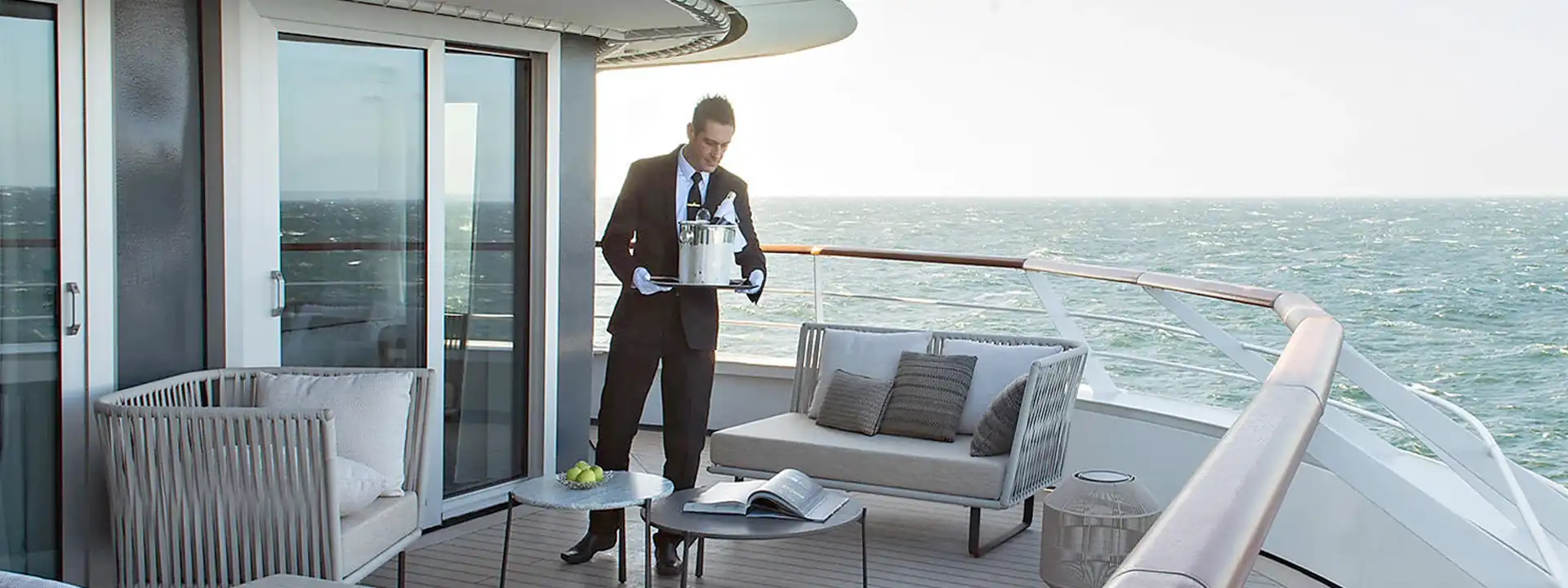
In practice, that means giving each function exactly what it needs. Butlers see a succinct view of their suite guests’ plans, preferences, and open issues. Restaurant leaders see reservations, walk‑in patterns, and flagged dietary needs without having to re‑ask. Shore‑excursion teams see live participation and delay information. Guest services see an ordered list of issues with clear ownership rather than a flood of disconnected requests.
When crew trust that the system holds a reliable version of the truth, they can spend more time in front of guests and less time chasing information. The luxury feeling grows not because of the software itself, but because crew have the bandwidth to offer the small anticipatory gestures guests remember.
The commercial value of seamless journeys
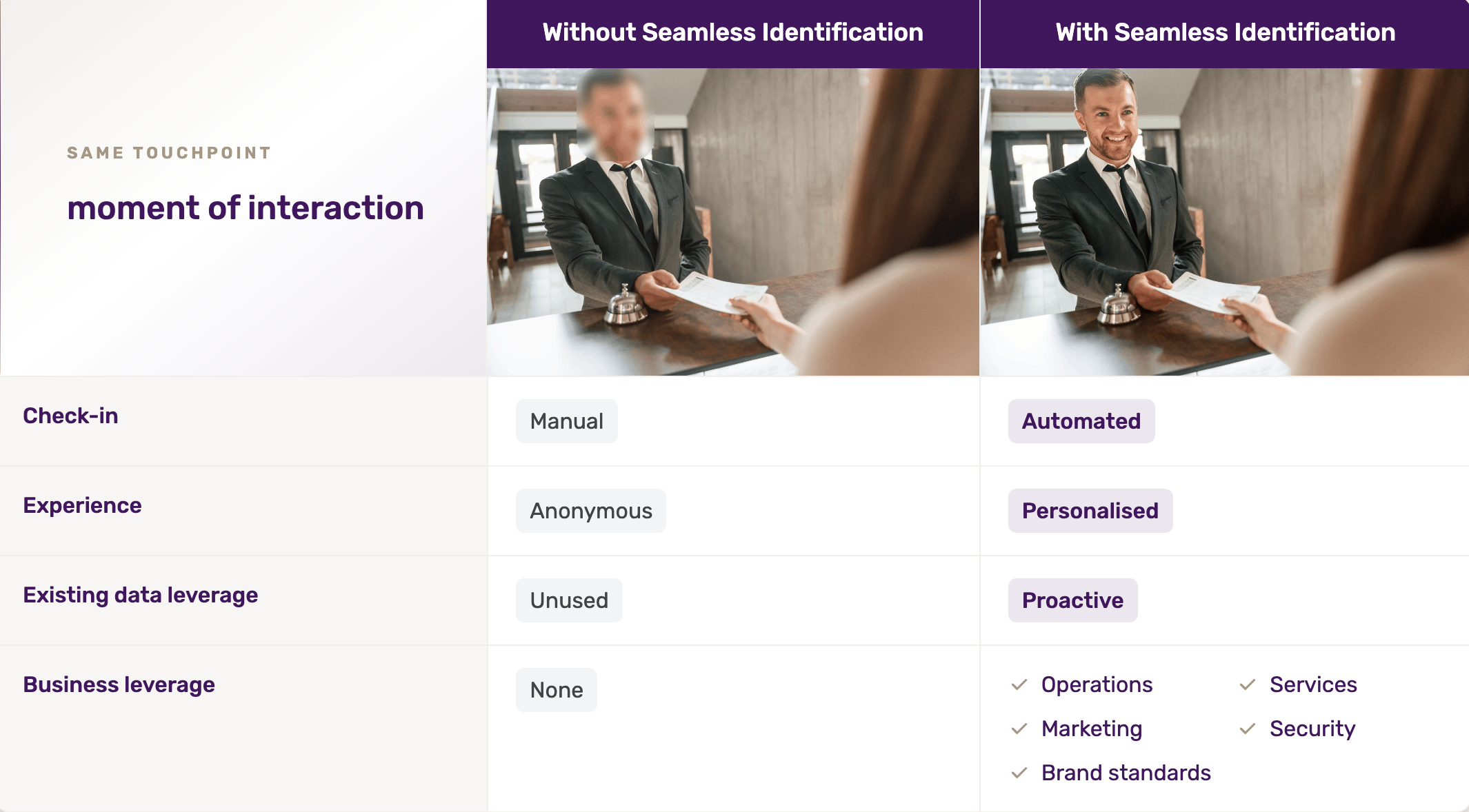
World‑class guest journeys matter because they change the economics of running a luxury cruise, not just how the voyage feels. When operations are orchestrated as one continuous journey rather than a series of handoffs, lines can optimise staffing allocation, directing crew effort to the moments and guests that matter most instead of firefighting avoidable issues. The same consistency makes high‑value guests feel expected and well handled across touchpoints, leading to higher repeat bookings and stronger loyalty. Over time, this turns intelligent operations into a value‑generating investment rather than an unavoidable cost, supporting a more resilient and profitable luxury model.
- Optimised staffing allocation around real guest flows and priorities
- Higher repeat bookings driven by consistent, high‑touch service
- Intelligent operations clearly positioned as a value‑generating investment
- Increases onboard spend by keeping premium experiences smooth and easy to access
Practical steps for luxury cruise lines
Transforming operations does not require a single dramatic cutover. The most effective programmes follow a staged approach that respects the realities of fleet deployment and port infrastructure.
Lines often begin with one or two ships and a few high‑impact journeys: seamless embarkation, VIP recognition at key venues, and unified incident handling. Once those patterns prove their value – shorter queues, higher guest satisfaction scores, fewer complaints – they are expanded across the fleet, with refinements for different ship sizes and markets.
Along the way, privacy, consent, and regulatory compliance remain non‑negotiable. Guests should always understand why certain data is collected and how it improves their experience. Ports with more limited infrastructure need solutions that work offline and synchronise safely when connectivity allows. Training and change management are treated as core parts of the project, not an afterthought.
The next differentiator at sea
Hardware arms races – bigger ships, more restaurants, more spectacular features – are expensive and easy for competitors to see and copy. Operational excellence is harder to replicate because it lives in how systems, people, and processes work together.
For luxury cruise lines, intelligent operations offer a way to turn that invisible layer into a visible differentiator. When every step of the journey feels considered, when staff seem to know what guests need before they ask, and when disruptions are handled with calm confidence, guests attribute that feeling to the brand.
Designing the perfect voyage, in this sense, is not a creative metaphor. It is a literal design challenge: using data, technology, and operational discipline to make sure every guest – especially the most demanding ones – experiences the ship not as a complex machine, but as a place where everything quietly works in their favour.
Interested in learning more? Talk to Neoma Sales today.