This article explores how the competitive landscape of motorsport has evolved, where premium guest experiences still break down, and how more intelligent guest operations can help organisers, sponsors, and hospitality teams deliver more consistent value across every race weekend.
- Enhancing the motorsport experience from paddock to podium
- The evolution of motorsport competitions over time
- Where the VIP journey breaks in motorsport events
- Building a more intelligent guest operations model
- Turning guest operations into sponsor value
- Learning across the season, not just the weekend
- Implementation realities and the next competitive advantage
From the first transporter rolling into the paddock to the final sponsor photo after the podium ceremony, every moment of a motorsport event shapes how guests remember the experience. That includes fans in grandstands, team principals, sponsors, corporate guests, media, partners, V/VIPs, and companions moving across hotels, airports, circuits, lounges, garages, and hospitality suites.
Enhancing the motorsport experience from paddock to podium
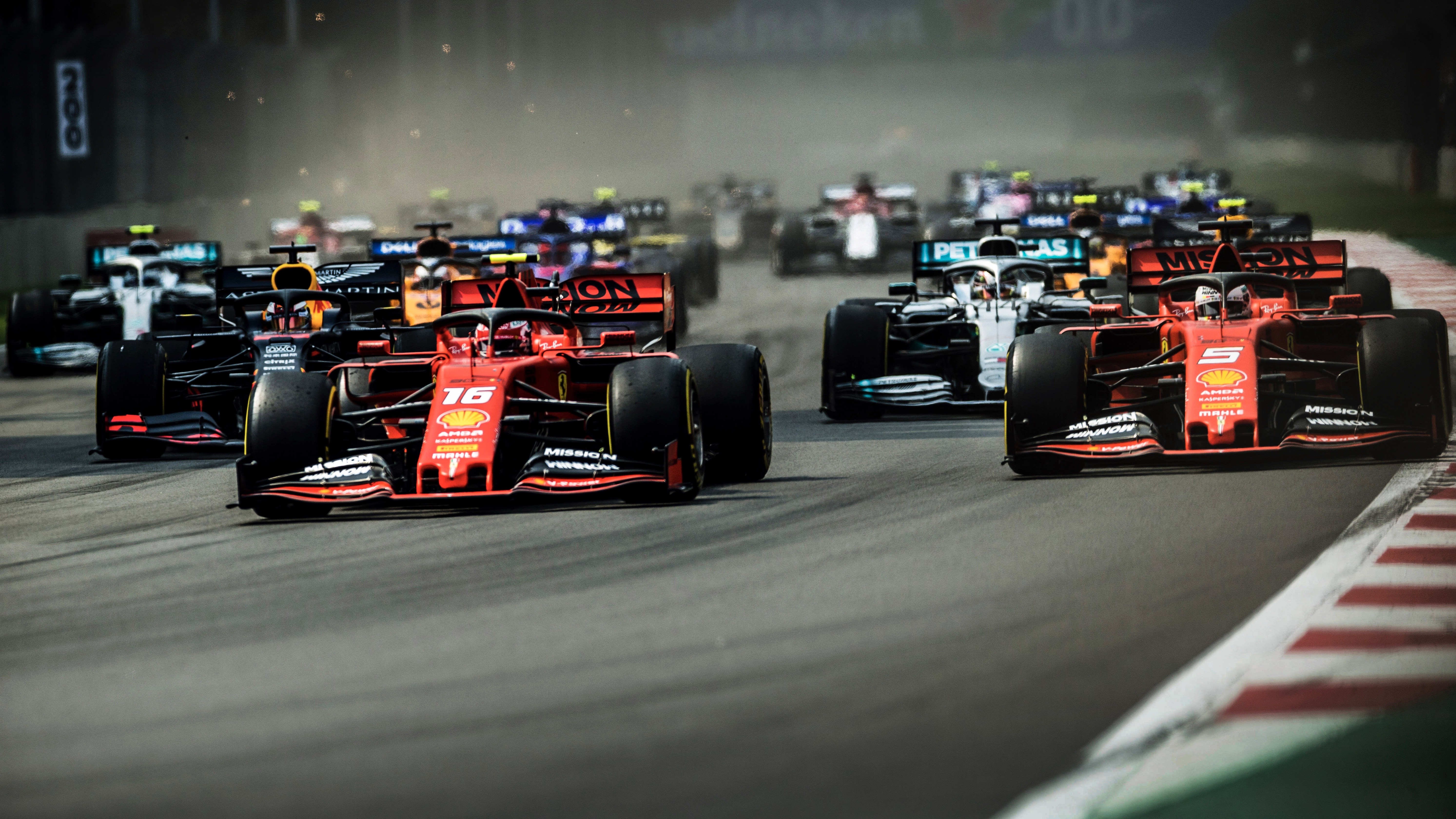
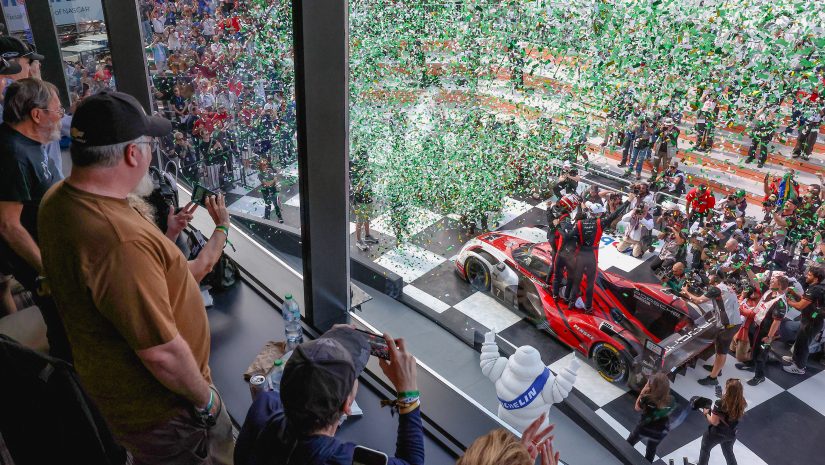
That pressure is growing because motorsport is becoming bigger, more premium, and more visible. Formula 1 continues to operate as a 24-race global championship, NASCAR keeps expanding its commercial and experiential footprint across major U.S. venues, and IMSA posted strong momentum in 2025, with 10 of 11 events setting attendance highs while Petit Le Mans became the first North American sports car race to sell out with more than 100,000 four-day attendees. At that scale, guest operations are no longer an administrative support function. They become part of the product, part of the sponsor promise, and part of the brand.
That shift is especially visible at events such as the United States Grand Prix in Austin, where the race weekend is also a premium entertainment destination, and at Daytona International Speedway, where Speedweeks compresses multiple series, audiences, and accreditation demands into a few intense days. Motorsport is no longer only about race execution. It is also about how well organisers orchestrate movement, access, recognition, hospitality, issue resolution, and follow-up around the sport itself.
The evolution of motorsport competitions over time
Motorsport has travelled a long way from its early racing roots. Formula 1, endurance racing, stock car racing, and rally all began as forms of engineering competition and speed testing before developing into formal championships with purpose-built venues, premium hospitality, global audiences, and highly structured commercial ecosystems.
That shift has accelerated because motorsport is no longer experienced only trackside. Formula 1 expanded F1 TV into a data-rich viewing product with onboard feeds, archive content, and team radio, while IMSA has grown both its audience and digital reach, including average television viewership of 393,000 in 2025, up 70% from 2024. When remote audiences are served at that level, guests and sponsors expect the live environment to feel equally seamless.
The economics of hospitality have evolved in parallel. The luxury motorsport hospitality market was estimated at $13.93 billion in 2025 and is projected to reach $28.94 billion by 2030. Hospitality is no longer a soft enhancement around the race. It is a major revenue line, a sponsor platform, and a competitive differentiator across circuits.
Where the VIP journey breaks in motorsport events
The core challenge is not simply check-in speed. Premium motorsport hospitality often still operates as a series of disconnected moments rather than a continuous guest journey. In practice, the journey runs from invitations, approvals, travel planning, hotel coordination, and companion registration through to venue arrival, multi-zone access, issue handling during the weekend, and post-event follow-up. When those stages are not managed as one system, even good technology feels isolated rather than transformative.
That gap becomes especially visible in motorsport because access rights are rarely simple. A sponsor guest may be cleared for a paddock club but not a garage walk. A team principal may arrive with last-minute companions. Media, partners, and V/VIPs may all require different permissions across Thursday setup, Friday practice, Saturday qualifying, and Sunday race day. Without a connected operating model, those changes create friction not only for guests, but also for the staff trying to serve them.
That pressure shapes the hospitality experience more than it often appears. During a race weekend, teams are frequently managing arrivals, dietary requests, transport updates, accreditation problems, garage tour timings, sponsor expectations, and internal escalations at the same time. Neoma‘s case studies describe an approach in which staff receive concise, relevant alerts as guests approach, reducing data overload and supporting more proactive service. In a motorsport setting, that support can be the difference between a guest feeling recognised and a guest feeling processed.
Poor continuity compounds the problem. A guest may be welcomed seamlessly at one race, then arrive at the next and have to repeat the same preferences, access rights, or unresolved issue. Across championships such as Formula 1, NASCAR, and IMSA, that inconsistency weakens the guest experience, the circuit brand, and the sponsor relationship surrounding it.
Building a more intelligent guest operations model
The opportunity is to treat guest operations as one connected operating model rather than a collection of separate tools. The model is strongest when the following elements work together inside one shared workflow:
- online pre-registration
- credential management
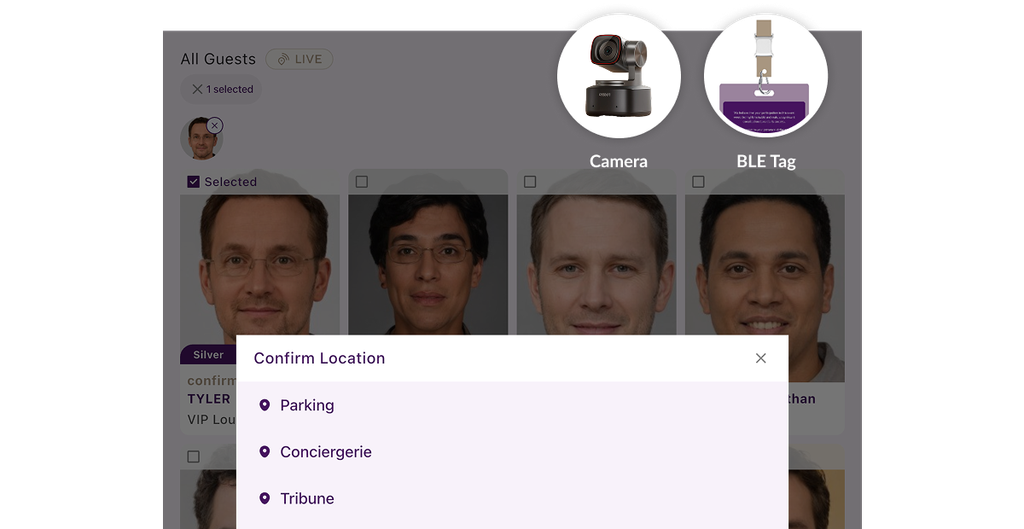
- facial verification where appropriate
- BLE-enabled accreditation recognition
- live issue handling
- staff alerts
- post-event intelligence
This is where a Gaia-linked operating model becomes much more compelling. The benefit is not simply that a guest can be identified faster at the counter. It is that staff can know who is approaching, what access they hold, whether they have companions, whether they raised an unresolved issue earlier, and whether they should be greeted, escorted, prioritised, or rerouted.
Neoma describes this kind of model as enabling stronger continuity across hotels, transport, access points, and venue teams, with measurable results including:
- 20% operational efficiency gains
- 45% higher V/VIP satisfaction
- 3x faster check
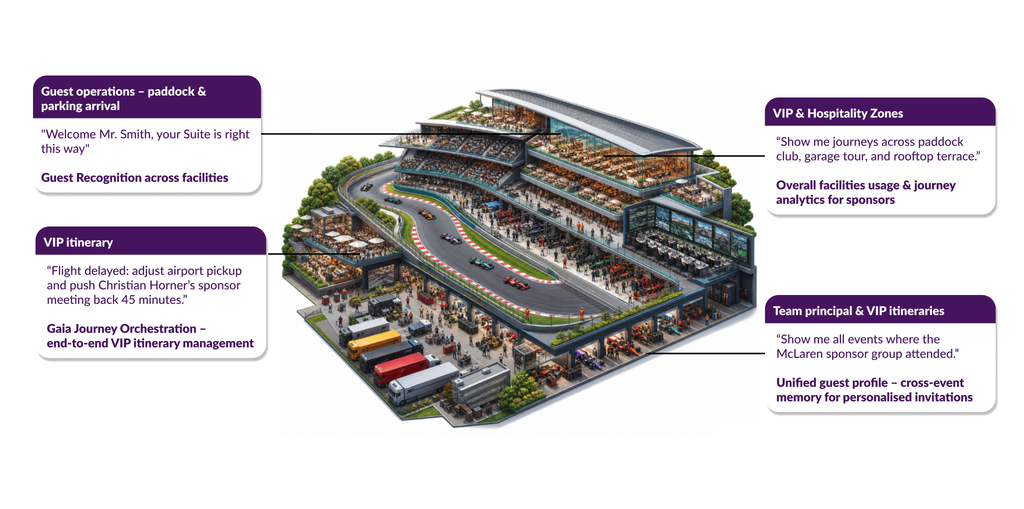
The operational value becomes even clearer behind the scenes. Hospitality teams need more than static guest lists. They need a live layer that shows who is arriving in the next 10 minutes, which suite has an unresolved issue, which sponsor guest should be prioritised, and which request has already been assigned. A Gaia-type platform becomes strategic at that point because it reduces radio chatter, limits duplicated work, improves handovers between teams, and makes the venue feel less like disconnected departments and more like one host with memory.
A practical example helps clarify that continuity. A sponsor guest arriving in Austin for the United States Grand Prix may check into a partner hotel, arrive at Circuit of the Americas, be recognised at accreditation, be guided to the correct hospitality space, receive a dietary request follow-up without asking again, be escorted to a garage tour on time, and later receive a post-event thank-you linked to actual attendance and preferences. The value of the platform lies less in any single interaction than in the continuity between them.
From an operational standpoint, this matters because modern motorsport events are managing far more than race schedules. They are coordinating transport flows, garage allocation, accreditation, sponsor obligations, media activity, guest access, hospitality delivery, and internal servicing across multiple zones and multiple days. That complexity repeats across circuits and guest profiles, which makes repeatability essential.
Examples from the competitive side reinforce the same point:
- Team Penske has accumulated more than 630 wins, nearly 700 pole positions, and 47 national championships across NASCAR, IndyCar, IMSA, and Australian Supercars
- Trackhouse Racing has grown from a startup without a charter in 2021 to a three-car contender, showing how quickly an organisation can scale when systems and execution keep pace with ambition
Turning guest operations into sponsor value
That continuity matters commercially because motorsport hospitality is not just a service layer. It is a sponsor platform. Premium hosting is where relationships are built, renewed, and expanded, so failures in guest operations can quickly become failures in sponsor delivery.
Better guest operations create sponsor value in several ways:
- better accreditation and recognition reduce breakdowns at premium zones
- richer guest histories make hosting more personal
- BLE-enabled accreditation data can help teams understand movement and engagement around activation areas
- hospitality teams can prove that guests were welcomed, guided, hosted, and retained across the moments that matter most
This matters in a market where premium sports hospitality can command high margins and motorsport fans show above-average willingness to pay more for luxury experiences. Better guest operations therefore support sponsor retention, premium pricing power, and the perceived value of race-weekend access.
Learning across the season, not just the weekend
Once guest operations are understood as a commercial system, the next step is to extend that logic across the season. Formula 1 spans continents, NASCAR runs a 36-race Cup calendar, and IMSA moves across a diverse 11-race WeatherTech season. The opportunity is not only to deliver one strong weekend. It is to carry intelligence forward from one event to the next. For endurance clients, relationship intelligence often spans both domestic series such as IMSA’s WeatherTech Championship and global pinnacles like the 24 Hours of Le Mans, where manufacturers host their most strategic partners over a full 24‑hour race window.
That means connecting pre-registration data, attendance history, access usage, issue logs, preferences, companion behaviour, and post-event feedback. Over time, organisers can identify which guests return, which sponsors engage most effectively, which hospitality products create the strongest satisfaction, and which failures repeat across venues. That is where event management begins to turn into relationship management.
Team Penske and Trackhouse Racing illustrate the point well:
- Penske’s scale across multiple championships shows how operational excellence has to hold across very different environments
- Trackhouse’s rapid growth shows how newer organisations can build advantage when operations scale cleanly
In this context, those examples matter not only because of sporting performance, but because they show the value of systems that remain consistent while environments change.
Implementation realities and the next competitive advantage
A more intelligent guest model only works if the operational foundations are in place. Key implementation realities include:
- biometric workflows require consent and governance
- BLE accreditation recognition depends on well-designed staff workflows, reliable devices, and strong adoption
- circuits operate with temporary infrastructure
- connectivity is often uneven
- staffing is mobile
- pressure peaks are sharp across a race weekend
Without those realities, the story sounds smoother than actual operations ever are.
Even so, the direction of travel is clear. The next advantage in motorsport will not come only from faster access control or shorter queues. It will come from giving hospitality, guest services, sponsors, protocol, transport, and accreditation teams one shared operational picture of the guest. That is where a Gaia-linked model becomes powerful: it helps venues move from fragmented service interactions to orchestrated guest journeys, and from one-off events to season-long relationship intelligence.
Interested in learning more? Talk to Neoma Sales today.